


About the IEGD
The Institute of Economics and Geography (IEG) was created in 1986 as a result of the merger of five institutes: Institute of Agricultural Economics, Institute of Applied Economics, Juan Sebastián Elcano Institute, Institute of Applied Geography and Jaime Balmes Institute of Sociology. The Demography Unit was incorporated in 1996, changing its name to the current one: Institute of Economics, Geography and Demography (IEGD). In 2007 he joined the Center for Human and Social Sciences. Its historical and voluminous bibliographic, cartographic and statistical collection today swells the Tomás Navarro Tomás library of the CCHS.
The activity is articulated in major lines of research and working groups, and also includes two laboratories.
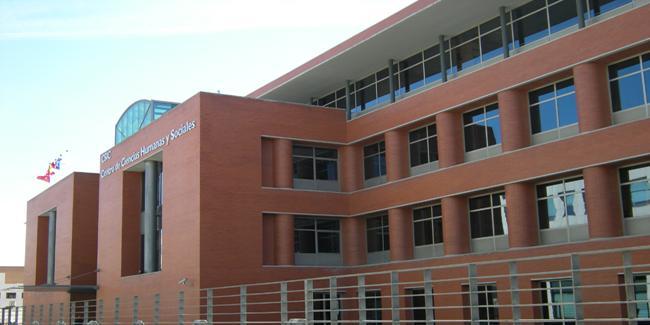
Its researchers are also part of four Associated Units: with the Polytechnic University of Madrid, with the Complutense University of Madrid, with the Department of Geography of the University of Alcalá and with the Ingema Foundation. In addition, it publishes the biannual journal "Estudios Geográficos", uninterruptedly since 1940, when it was launched by the Juan Sebastián Elcano Institute, one of those subsumed in 1986.
All this structure and activity has scientific research as its main objective. Regarding the staff of State researchers, research fellows and technical staff, research is financed with the corresponding grants for R+D projects, awarded in the various public calls, whether national, regional and European Union plans, or through contracts and agreements with administrations and institutions.
The main objective of the GIGI is specified in specific tasks: to provide advice and technical support; generate and develop specific methodologies; to facilitate young graduates their training and research activity so that they can join the current R+D+I system; to promote research and teaching relations with other national and international Centres; publish results in books, scientific and popular articles, in presentations and communications at national and international conferences, and through the organization of congresses, seminars, round tables and open days. In short, to generate knowledge and transfer it to society to thus support planning and decisions in the public and private spheres.
Data privacy policy at the IEGD